
How AI and Predictive Analytics Are Changing Clinical Decision-Making in Spine Surgery
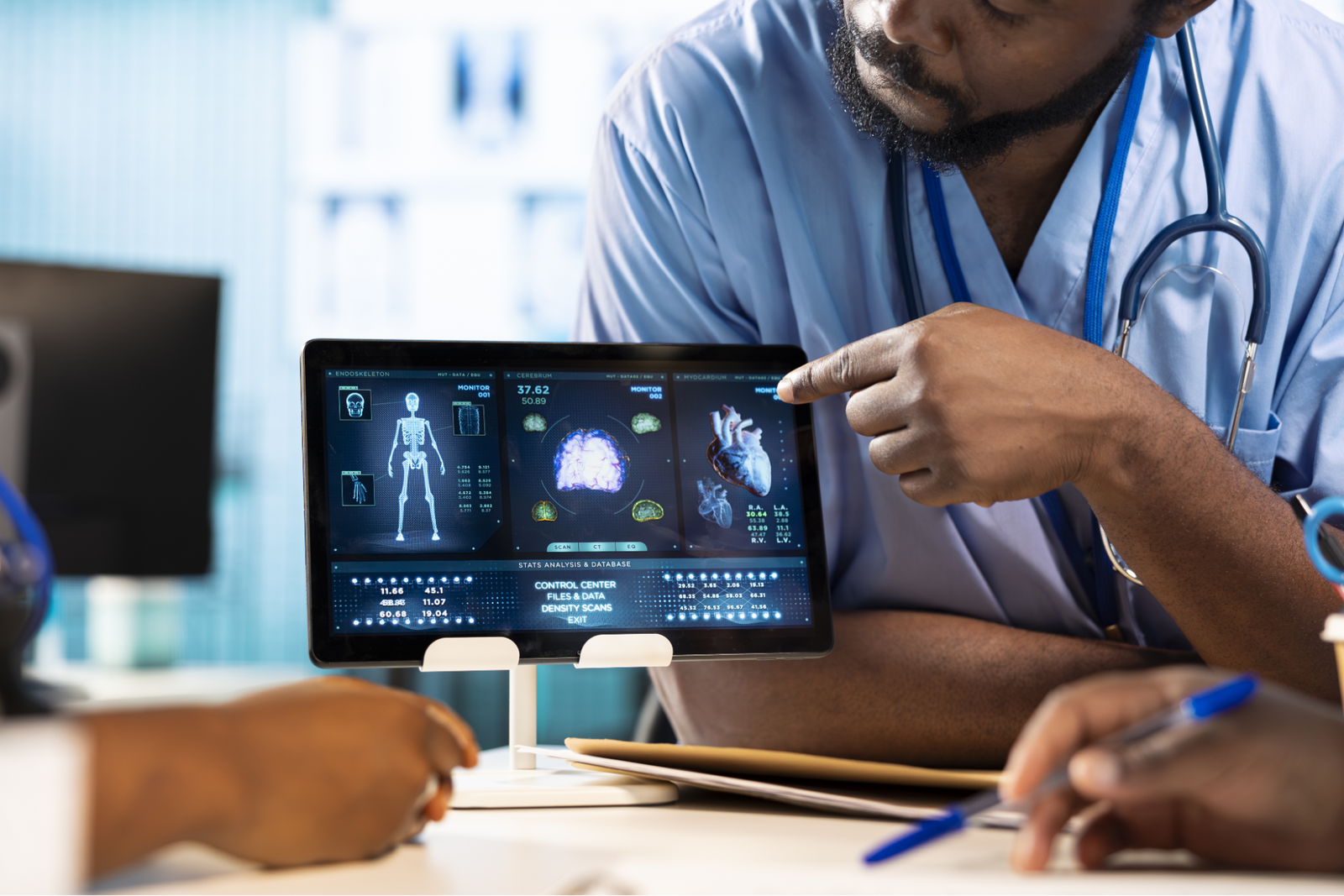
AI and predictive analytics are finding their place in the clinical reality of complex spine surgery, thanks in no small part to the Spine Computational Outcomes Learning Institute (SCOLI). Dr. Nitin Agarwal and Dr. D. Kojo Hamilton co-direct this independent nonprofit to bridge the gap between complex computational data and real-world clinical neurosurgery.
The mission behind the Spine Computational Outcomes Learning Institute
SCOLI’s mission spans three connected areas of work. The first is computational outcomes and AI, which is where surgeons use tools such as machine learning, radiomics, and predictive analytics to model surgical risk, biomechanical forces, and functional outcomes for each individual patient.
The second area SCOLI seeks to advance is multidisciplinary science, which brings together neurosurgery, biomedical engineering, physiatry, data science, pain management, and related fields to better understand spinal disease. It follows patients all the way from diagnosis to recovery.
SCOLI also works to improve health literacy and patient empowerment. Here, the institute focuses on translating complex clinical insights into plain language and practical education. The goal is to help every patient understand what the data means for their procedure and recovery.
“Two patients with the same diagnosis can have very different risks and recoveries based on medical conditions and personal goals,” explains Dr. Hamilton. “Our aim is to make those differences visible and clinically useful before the first incision.”
How AI-assisted planning and outcomes data via SCOLI informs decision-making before a patient ever reaches the operating room
In complex spinal care, the operating room should be where a team executes a plan. AI-assisted planning shifts critical thinking into the days or weeks before surgery. This early planning allows ample time to compare options carefully.
Using high-resolution imaging along with inputs such as bone density metrics and spinal alignment parameters, advanced models can simulate biomechanical loads and stress patterns.
“We can now examine what-if scenarios long before the procedure,” notes Dr. Hamilton. “We can explore what will happen when we adjust screw trajectories and test how a change in angle might affect adjacent segments.”
This is not a case of the model making decisions about the surgery. The technology simply allows the surgeon to enter the OR with fewer unknowns and fewer preventable surprises.
How predictive models help today’s surgeons weigh risk and benefit in complex cases
Unfortunately, the patients who may benefit most from structural correction in spine surgery are often the ones least able to tolerate it. Elderly patients with severe deformities can be caught between two untenable options: either live with worsening disability, or undergo a large operation that carries substantial physiological stress.
Dr. Hamilton argues that predictive models help surgeons weigh those decisions with a more objective lens. “Instead of relying only on gut feeling, we can incorporate the frailty measures, bone quality, and medical history of each patient to give us better insight into their specific risk of complications. The model can’t promise an exact outcome, but it can allow teams to compare approaches more honestly.”
That insight can change the recommended plan. Sometimes, the model may suggest that a full reconstruction is too risky for a specific patient, in which case the team may lean toward a more targeted decompression or limited correction that still offers meaningful relief. Performing the surgery that best fits the patient’s physiology and priorities is increasingly important as the average spine patient grows older and becomes more medically complex.
How transparency and shared decision-making make patients feel like partners in the process
Many spine patients arrive not only exhausted by pain and anxious about neurological symptoms but also understandably overwhelmed by imaging reports they can’t decode. If predictive analytics is going to improve care, it must also improve communication.
Dr. Hamilton finds that shared decision-making becomes more tangible when he discusses risks and options in a way that is specific to each patient. “When so much is riding on a procedure, people don’t want to see a static X-ray or hear a generalized 10% risk,” he says. “We can now sit with each patient and review tailored risk profiles and clear 3D models. That sets the stage for a better conversation about what their surgery is trying to achieve and what their recovery is likely to involve. It allows us to better explain the tradeoffs between more extensive and more conservative approaches.”
This transparency makes it far easier to discuss goals that have weight outside the clinic. After all, the right endpoint for a patient isn’t a perfect-looking scan. They want to talk about outcomes like walking around the block or playing with grandchildren. When surgeons explain the numbers in plain language and tie them back to real life, patients do more than consent to a procedure; they participate in a decision about how they want to live.
Training the next generation of surgeons for AI spine surgery and predictive analytics in healthcare
Dr. Hamilton says he is training the next generation of spine surgeons to interpret predictions and understand where data can mislead. That requires what he describes as computational fluency.
“Tomorrow’s surgeons will need to learn how to use predictive tools as advisors without treating them as unquestionable authorities,” Dr. Hamilton reflects. “We help them build that skill by prompting them to compare model predictions side-by-side with clinical instincts during case conferences and preoperative planning. When trainees see disagreements, they learn to ask better questions. They find out which inputs drive the recommendation and whether any important variables are missing. They ask whether a dataset might underrepresent certain patient types, or whether clinician experience is being shaped by recent cases rather than broader evidence.”
The boundary remains clear, even as tools become more powerful. No algorithm can hold a patient’s hand or pick up on fear behind a question, and no machine can take moral responsibility for an outcome. Predictive analytics can inform decisions and make planning more individualized, but the human surgeon still owns the decision and the relationship.