
Long-Term Thinking and the Energy Transition: Brooks Sherman on Infrastructure as Investment
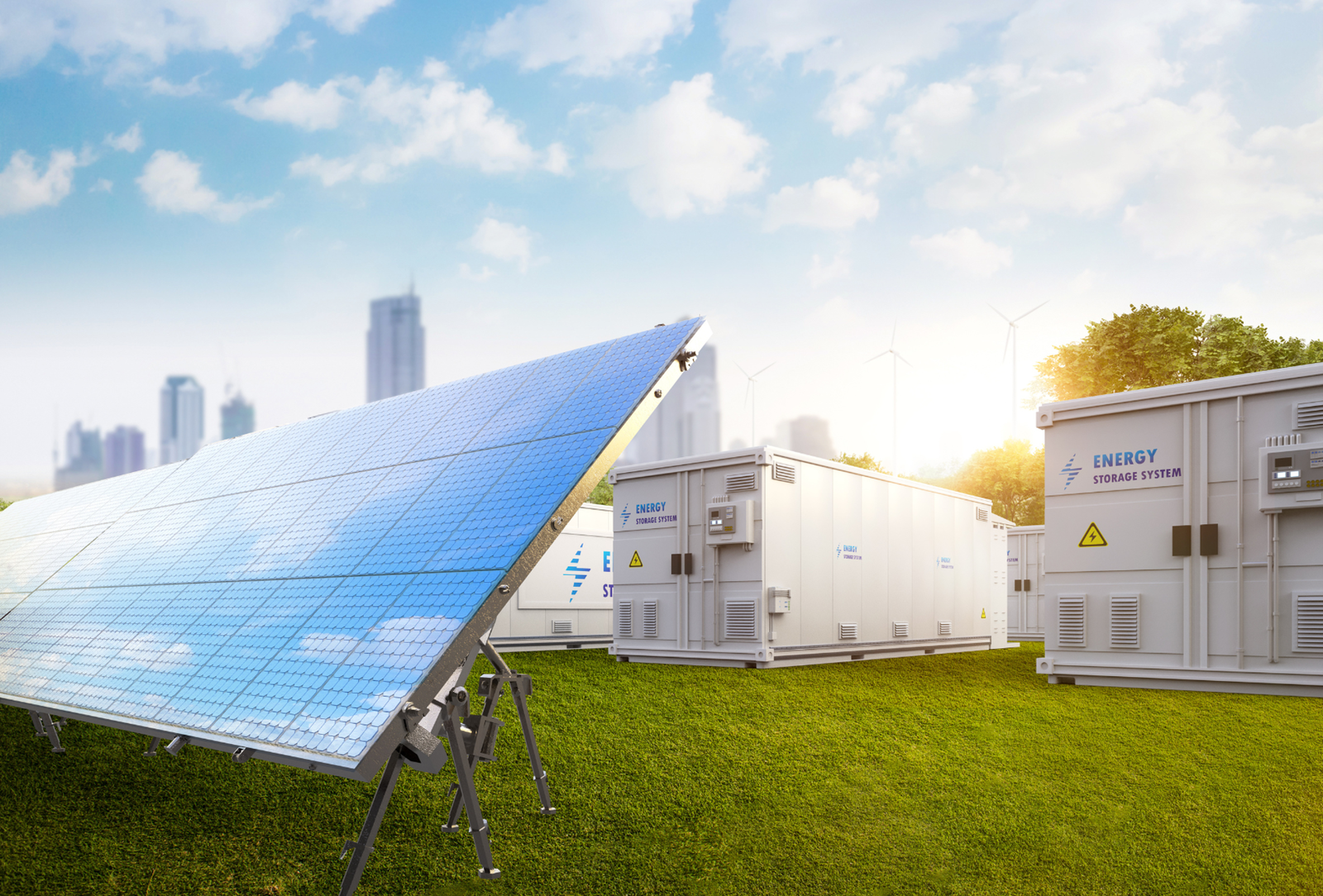
An estimated $3.4 trillion will be invested in energy infrastructure in 2026, and battery storage is capturing a growing share of that investment.
Even as the Trump administration dismantles domestic support for clean energy, global energy investment is having a record year, with trillions of dollars flowing into everything from solar farms to grids to battery storage. According to Brooks Sherman, a sustainable innovation strategist focused on storage and community energy whose MBA capstone at the University of Vermont’s Grossman School of Business analyzed next-generation battery technologies, growth in electricity storage reflects the type of forward-thinking required to support future power needs.
Clean Energy Transition Investments: Where the Investment Is Flowing
Global energy investment is projected to reach approximately $3.4 trillion in 2026. Of that, around $2.2 trillion is going toward low-emission technologies and electricity infrastructure, renewables, grids, storage, nuclear, electrification, and efficiency, compared to roughly $1.2 trillion for fossil fuels. The ratio of clean to fossil investment has roughly doubled since 2015.
According to the IEA’s World Energy Investment Report for 2026:
- More than $665 billion will be invested in renewable energy in 2026.
- Around $365 billion will be dedicated to solar.
- Around $200 billion will be invested in wind.
- Around $75 billion will be spent on hydropower.
Grid infrastructure, historically an afterthought in clean energy investment conversations, is estimated to attract close to $550 billion in 2026, reflecting a 20% year-over-year increase. Additionally, more than $100 billion is expected to be invested in battery storage. For Sherman, that figure is encouraging. He says, “Growth like that may mean the market is starting to treat storage as something to build around rather than add on.”
Long-Term Outlooks
A dollar invested in a technology with a 20-year service life is different, strategically, from one invested in something built to last a century. The estimated life expectancy of energy infrastructure depends on methodology, operating conditions, and who’s reporting figures. However, commonly cited ranges include:
- Solar panels: 25-30 years
- Solar inverters: 10-15 years
- Wind turbines: 20-30 years
- Battery storage systems: 15-20 years
- Hydropower facilities: 65-85 years
- Nuclear facilities: 40-100 years
Longevity alone doesn’t determine which investment makes sense. For example, nuclear facilities offer the longest runway on this list, but they also require significant capital, permitting, and lead time that limit where and how quickly they can be deployed.
A small or rural community waiting on grid stability today probably can’t wait on nuclear’s development timeline, and demand in such a community likely doesn’t call for nuclear. Solar, wind, and battery storage have shorter lifespans, but their smaller footprint and faster build-out make them well-suited to these needs.
For Sherman, long-term thinking about energy infrastructure isn’t just about which asset lasts longest. It’s about matching the right timeline and scale to the problem.
Why Battery Storage Is Especially Attractive
IEA estimates put the growth of battery energy storage investments at 35% year over year. Several factors help drive that growth.
Cost Reductions
Battery storage costs have fallen over the past decade. Analyses drawing on data from the International Renewable Energy Agency show the fully installed cost of utility-scale battery storage projects dropped roughly 93% between 2010 and 2024. BloombergNEF’s 2025 survey found that stationary storage pack prices were as low as $70 per kilowatt-hour. That trajectory has made utility-scale storage financially viable in markets that couldn’t economically support it just a few years ago.
Speed to Market
Unlike gas or nuclear plants, which face years-long development pipelines, battery storage systems can be built quickly. According to the International Energy Agency, the median construction time for utility-scale batteries is around 275 days, roughly comparable to solar Photovoltaic (PV) and far below typical timelines for gas-fired plants or nuclear projects. Even accounting for permitting, financing, and grid connection, battery projects in many markets reach operation in less than three years—a fraction of the timeline for most other generation types.
For Sherman, this speed matters for reasons beyond convenience. “A shorter build timeline means less of a waiting period between deciding you need capacity and having it,” he says. “That can change how planners think about risk.”
Revenue Stacking
Battery storage projects have an advantage other clean energy investments generally don’t: multiple ways to earn revenue from a single asset. This practice, often called revenue stacking, can include:
- Arbitrage. Buying electricity during low-demand, low-cost periods, such as midday solar peaks, and discharging it during high-demand, high-cost periods.
- Ancillary services. Providing fast-responding frequency regulation, voltage support, and reserves to help keep the grid stable.
- Capacity payments. Earning contracted revenue for being available to supply power during grid emergencies, whether or not that power is ultimately called on.
Combining these revenue streams can improve a project’s overall return compared with relying on a single use case, which is part of why storage has attracted a wider range of investors than earlier in the technology’s commercial history.
Future Challenges to Overcome With Infrastructure Investments
The pressures shaping energy demand aren’t slowing. Electricity-related spending already accounts for nearly 60% of all global energy investment, and that share is expected to climb as growing populations, expanding computing demand, and broader electrification push more of daily life onto the grid.
Data centers are a clear example of how quickly new demand can reshape planning. Recent analyses estimate that global investment in data-center infrastructure topped $100 billion in 2025 alone, driven largely by cloud, AI, and content-delivery growth. That demand has had ripple effects beyond the tech sector, contributing to increased interest in new gas‑fired and other dispatchable power plants as planners look for capacity that can follow load.
In parallel, storage and clean generation investment is working to close the emerging gap between fast‑rising demand and the need to decarbonize. Long‑duration storage, which can shift large blocks of energy across many hours or days, is beginning to reach early commercial deployment, extending the role batteries can play in meeting data‑center‑driven peaks and managing multi‑day weather events.
The North American Electric Reliability Corporation’s 2025 Long-Term Reliability Assessment, released in January 2026, found that 13 of 23 North American assessment areas face resource-adequacy challenges over the next 10 years, driven by demand growth that is outpacing new resource and transmission additions. Summer peak demand alone is projected to surge by about 224 GW over the assessment period, and a large share of planned additions consists of solar PV and battery storage, which are reshaping the capacity mix and planning standards.
Meeting that kind of demand growth responsibly will require sustained, long-term investment across generation, storage, and grid infrastructure, and—in Sherman’s view—a shift toward treating these assets as core, long‑horizon infrastructure rather than short‑term projects.