
Adam Kidan on the Fractional Workforce: When the Org Chart Stops Being Full-Time
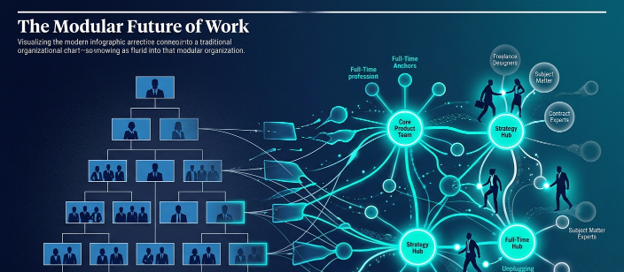
The full-time hire used to be the only serious way to fill an important role. If you needed a chief marketing officer, a senior engineer, or a head of finance, you ran a long search, made an offer with a full salary and benefits, and hoped the fit held. That model still exists, but it is no longer the only one, and for a growing number of companies it is not even the first choice.
The fractional workforce is the reason. A fractional executive is a senior professional who gives a company a slice of their week rather than all of it. A startup that cannot afford a full-time finance chief brings one in two days a week. A midsize firm that needs marketing leadership for a six-month push hires a fractional head instead of carrying the cost forever. Alongside the executives sits a deep bench of contract specialists, project-based contractors, and skilled gig professionals who move from engagement to engagement by choice.
This is not the old story of companies squeezing labor costs by cutting people loose. The senior end of this market is driven by the workers themselves. Experienced professionals have realized they can earn more, control their schedules, and apply their expertise across several companies instead of pouring it into one. The talent set the terms, and employers adapted.
From where I sit in staffing, the appeal to a business is straightforward. You get access to senior expertise you could not otherwise afford or justify full-time. You scale the relationship up or down as the work demands. You bring in a specialist for exactly the problem in front of you and you are not stuck carrying that cost once the problem is solved. For a company facing uneven demand or a specific project with a clear end, that flexibility is worth a great deal.
The flexibility comes with real demands on management, and leaders who ignore them get burned. A fractional team only works if the company is clear about scope, deliverables, and how success is measured. Loose direction that might survive with a full-time employee who is in the building every day falls apart when the person is there eight hours a week. Culture takes work too. Contributors who split their time across clients still need to understand what the company is trying to build, or their work drifts away from it.
There is also a loyalty question worth being honest about. A fractional contributor is not going to treat your company the way a committed full-time employee does, and expecting otherwise is a mistake. The trade is deliberate. You give up some continuity and some institutional memory in exchange for senior skill, speed, and the ability to adjust. For the right roles that is a smart trade. For the roles that hold your culture and your long-term direction, full-time commitment is still the right call.
The companies that will use this well are the ones that think clearly about which roles belong in which category. Core leadership and the people who carry your mission day to day should be invested employees. Specialized, project-based, or variable work is often better served by fractional and contingent talent. Draw that line on purpose rather than by accident, and the flexible model becomes a genuine advantage instead of a source of confusion.
The shape of the org chart is changing. It is becoming less of a fixed pyramid and more of a flexible structure that expands and contracts with the work. Leaders who learn to build and manage that kind of team will move faster and spend smarter than those still treating every role as a permanent hire.
Adam Kidan is the President of Empire Workforce Solutions and an experienced entrepreneur.