
Doug Hoven on the Hidden Cost of Waiting to Buy in Hampton Roads
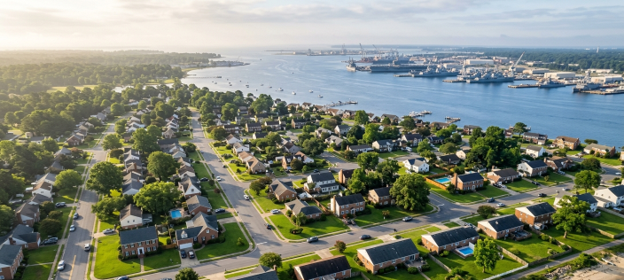
Why the smartest buyers in coastal Virginia are doing the math instead of watching the rate ticker.
Featuring Doug Hoven, REALTOR | The Ron Sawyer Team at RE/MAX Prime
A Norfolk couple walked into Doug Hoven’s office this past fall with the same question he has heard at least a hundred times in the last eighteen months. They wanted to know whether they should keep renting until mortgage rates dropped. They had been waiting since 2023. They were now into their third year of waiting.
Hoven did not give them an opinion. He did the math in front of them.
“That is the only conversation worth having,” Hoven says. “Everybody wants to talk about rates. Nobody wants to talk about what the wait actually costs. The wait has a number, and it is almost always bigger than the number people are afraid of.”
The math nobody runs at the kitchen table
Buyers in Hampton Roads have spent most of the last three years sitting on the sidelines. The reasoning sounds responsible. Rates are higher than they were in 2021, prices feel firm, and the prevailing wisdom on social media is that something is about to break.
Something usually does break, but rarely in the direction people are waiting on. Since 2022, the median sale price in the Hampton Roads market has continued to climb, inventory has remained tight, and rates have moved in narrow bands without delivering the dramatic drop buyers keep predicting. Each month spent waiting carries three costs that compound on top of each other.
The first is rent. A $2,400 monthly lease across eighteen months of waiting is $43,200 paid into someone else’s mortgage, with zero equity built. The second is appreciation. Even at a conservative 3 percent annual gain, a $400,000 home in Chesapeake or Virginia Beach is worth roughly $18,000 more after a year of waiting. The third is principal. A buyer who closed eighteen months ago at a higher rate has already paid down several thousand dollars in principal and built equity that no rate drop will retroactively hand to a renter.
Add those three together and the cost of waiting on a single Hampton Roads purchase clears $60,000 inside two years. That is the number Hoven puts in front of clients before any conversation about rates.
“People are afraid of paying 6.5 percent. They are not afraid of paying $60,000 to wait, because nobody ever shows them that number.”
Why Hampton Roads behaves differently than the headlines suggest
National housing coverage tends to flatten every market into one story. Hampton Roads does not fit that story. The region is anchored by the largest naval base in the world, a federal civilian workforce, the shipbuilding industry, and a steady flow of PCS moves that creates demand whether rates are at 3 percent or 7 percent.
That demand floor is the reason prices in Norfolk, Virginia Beach, Chesapeake, and Suffolk have not corrected the way speculators kept predicting. Military families relocating on orders cannot wait for a better rate. They have a report date. BAH covers a defined window, and the math of using a housing allowance to build equity beats renting in nearly every Hampton Roads ZIP code.
“This is a market that runs on orders, not on op-eds,” Hoven says. “If you are waiting for Hampton Roads to behave like Phoenix or Austin, you are going to be waiting a long time. The demand here does not care about the Fed.”
The refinance escape hatch most buyers forget exists
The single biggest misconception Hoven encounters is the belief that the rate at closing is the rate a buyer is stuck with. It is not. A buyer who closes today at 6.5 percent and watches rates drop to 5.5 percent next year can refinance. The home is theirs. The equity earned during the wait is theirs. The appreciation is theirs. The only thing that changes is the monthly payment.
The buyer who waited for the lower rate gets the same 5.5 percent loan but starts from a higher purchase price and a lower equity position. Same rate. Worse outcome.
“You marry the house. You date the rate,” Hoven says. “That is not a slogan I made up. It is the only sentence about real estate finance that has been true in every market I have ever worked in.”
What waiting actually protects against
Waiting is not always wrong. There are buyers who should wait, and Hoven is direct with them when they are sitting across from him. A buyer without three months of reserves should wait. A buyer with credit issues that a six month repair plan can fix should wait. A buyer who has not held steady employment for two years and is applying for a conventional loan should wait.
Those are the only three reasons that hold up under scrutiny. Waiting because rates feel high, or because a friend at work said a crash is coming, or because the news keeps using the word “uncertainty,” is not a financial strategy. It is a feeling, and feelings do not build equity.
The Hampton Roads buyer who is ready right now
The Norfolk couple ran the numbers with Hoven, closed on a four bedroom in Chesapeake six weeks later, and locked at a rate that they fully expect to refinance inside two years. Their monthly payment is roughly $180 more than the rent they had been paying. The equity they will build in twenty four months covers that gap and then some.
“They did not buy because rates were perfect,” Hoven says. “They bought because the math worked. Rates are never perfect. The math either works or it does not.”
Connect with Doug Hoven
Doug Hoven is a licensed REALTOR with the Ron Sawyer Team at RE/MAX Prime, serving buyers and sellers across the Hampton Roads region. He can be reached at (757) 434-0915, doug@theronsawyerteam.com, through douglashoven.com, on LinkedIn, or through TheRonSawyerTeam.com.
This article is for informational purposes only and does not constitute financial advice. Buyers and sellers should consult with licensed lenders, real estate agents, and attorneys regarding their specific situation.