
UX Research Platform Lyssna Shows Why Talking to Your Users Is the Ultimate Competitive Advantage
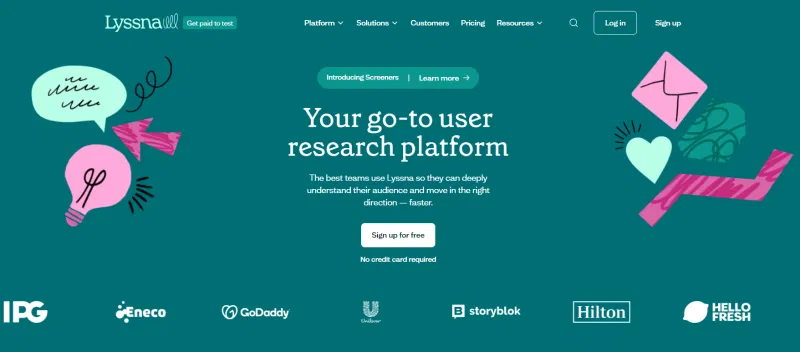
First impressions are important, both in the real world and online. Lyssna founder Mateja Milosavljevic realized this after reading the book Designing the Obvious by UX strategy expert Robert Hoekman Jr. in 2008. In this book, Hoekman emphasizes the importance of designing a good user interface from the first impression to the last. Mateja put these ideas into action by creating fivesecondtest.com, an online tool that measured people’s impressions of a website’s design within five seconds of seeing it. Five Second Test became the first step towards the company Lyssna, a bootstrapped venture that has since extended its influence worldwide as a global SaaS brand.
FiveSecondTest.com would eventually lead to the launch of UsabilityHub, now known as Lyssna, and in 2013, Mateja partnered with Nicholas Firth-McCoy and Tristan Gamilis, two Australian entrepreneurs who had co-founded the time-tracking platform Paydirt. Together, the three founders expanded what began as a simple impression tool into a comprehensive user research platform with usability testing tools and a global panel—all without external investment.
In a highly competitive space characterized by venture capital-backed UX research software companies such as UserTesting, Lyssna experienced the pressure of finding ways to stand out early on. This pressure came to a head after the company decided to rebrand in 2023 after operating for almost a decade under the name UsabilityHub. Lyssna was able to survive and even grow in this new era by sticking to its core ethos: keeping the customer first.
While Lyssna’s efficient platform and ethical AI approach set it apart from competitors, customers consistently point to the company’s thoughtful customer communication as a standout quality.
Lyssna founder Mateja says, “Listening to users is a competitive advantage. By gathering feedback from the people you’re designing for, you gain fast, actionable insights that inform decision-making—from strategy and concept through to design and implementation. The result? Experiences your end users will love.”
Lyssna’s core goal of listening more deeply to its users in turn helps its users listen to and learn from their own customers. The platform connects user insights across different research methods, gathering data through unmoderated remote user testing, moderated interviews, and market research to enable faster decision-making for companies of any size.
A key part of what makes this possible is Lyssna’s global research panel—over 690,000 participants spanning 124 countries and 55 languages. This extensive, diverse panel means companies worldwide can quickly access real user feedback on their ideas, products, and services without the time and cost of recruiting participants themselves.
As a result of Lyssna’s human-first approach to UX research, it has become a go-to research tool for companies such as GoDaddy, Klarna, Hubspot, and Monday.com. It has also consistently been rated a G2 Leader in UX research software. In 2025, Lyssna also received the Breakthrough Culture Award – Growth Edition, recognizing it as one of the most loved workplaces in Australia.
Lyssna stands out in the crowded UX research space by delivering what product teams need most: simplicity and speed. Designed for designers, marketers, and researchers alike, the platform offers an intuitive way to collect fast, actionable insights—without the steep learning curves or rigid contracts often tied to full-suite solutions. Its all-in-one functionality empowers teams to test concepts, validate designs, and make user-informed decisions in record time. As Lyssna looks toward the future, its driving goal will likely stay the same. “Our aspiration is to be the platform for growing teams to understand their audiences so they can move in the right direction–fast,” says Mateja. By continuing to listen closely to its own users, Lyssna shows how bootstrapped companies can turn their customer base into an effective competitive advantage in their own industries.