
Beyond Bigger Models: Rahul Ganta and the Case for Human-Centered AI in Critical Infrastructure
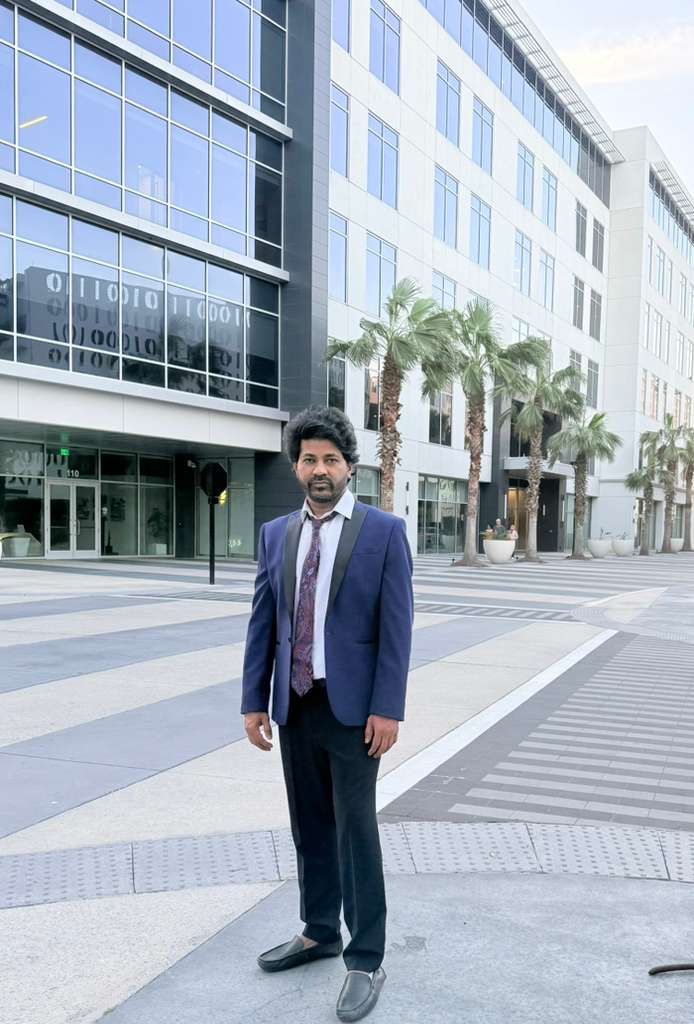
While much of today’s artificial intelligence discourse revolves around ever-larger models and unprecedented compute scale, some of the most consequential AI work is happening far from the spotlight in safety-critical systems where reliability, governance, and human trust matter more than novelty. One engineer helping to redefine how AI is responsibly deployed in such environments is Rahul Ganta, a Staff Software Engineer in Digital Intelligence at Wabtec Corporation.
With more than 17 years of experience across distributed systems, cloud platforms, and applied AI, Ganta has emerged as a leading practitioner of what he describes as human-centered AI engineering: an approach that treats organizational design, accountability, and collaboration as first-class technical concerns. His work sits at the intersection of artificial intelligence and national infrastructure, particularly in rail transportation, an industry where system failures carry real economic and public-safety consequences.
Engineering AI Where Failure Is Not an Option
Unlike consumer AI applications, rail and industrial platforms operate under strict performance, regulatory, and safety constraints. At Wabtec, Ganta works on large-scale digital intelligence systems that apply advanced analytics and machine learning to optimize rail operations, predictive maintenance, and dispatch decision-making.
What distinguishes his role is the scope of ownership. Ganta has been deeply involved not only in critical train services design and development, but in end-to-end system architecture bridging software engineering, System performance, analytics, cloud infrastructure, and domain-specific operational requirements. Colleagues describe his contributions as pivotal in translating experimental AI capabilities into the development of production-grade railroad software systems that can be trusted by operators and regulators alike.
“In safety-critical environments, accuracy alone isn’t enough,” Ganta has noted in public forums. “Systems must be explainable, operationally resilient, and aligned with how people actually work.”
From Systems Engineering to Collaborative AI Leadership
Over the course of his career, Ganta has consistently focused on scalability and reliability. His early work in distributed systems and cloud platforms laid the foundation for his later emphasis on collaborative AI systems designed to augment, rather than replace, human decision-makers.
This philosophy has informed his leadership across cross-functional teams, where he has helped align software engineers, integration testers, data scientists, and operations specialists around shared performance and quality goals. By embedding governance, monitoring, and feedback loops directly into AI platforms, his work has enabled organizations to deploy advanced analytics without sacrificing transparency or control.
Such systems-level thinking has become increasingly relevant as enterprises seek to integrate AI into mission-critical workflows rather than isolated pilot projects.
Recognized Voice on Responsible AI at Scale
Ganta’s perspective has gained international recognition, earning him an invitation as an Invited Speaker at the UK-based International Conference on Data Science and AI for Social Goods and Responsible Innovation (DASGRI-2026). He will present on “Collaborative AI & Human-Centered Engineering: Lessons from Scaling Performance and Quality Across Teams,” highlighting how sustainable success with AI depends not only on model performance but also on organizational design, effective tooling adoption, and strong cross-team collaboration. Invitations of this nature are typically extended to practitioners with demonstrated expertise and industry impact, reflecting Ganta’s growing recognition beyond his organization.
Research with Direct Operational Impact
In parallel with his industry work, Ganta has maintained an active applied research profile. His peer-reviewed publication “AI-Powered Train Delay Prediction and Minimization in Cloud-Based Precision Dispatch Systems,” published in the IJFMR Journal, addresses a core challenge in rail operations: improving punctuality through real-time predictive analytics. The work demonstrates how cloud-native architectures and AI models can be integrated into live dispatch environments, offering measurable operational benefits.
At the 6th GCAT Conference in 2025, Ganta presented research on active learning for real-time data labelling in streaming systems, proposing methods to reduce labelling costs while improving adaptability, an issue central to deploying AI at an industrial scale. He has also presented on end-to-end cloud procurement automation at the ICAFT Conference, illustrating how AI-enabled platforms can streamline complex enterprise workflows.
Across these publications, a consistent theme emerges: research grounded in practical constraints, with solutions designed for adoption rather than abstraction.
Trusted Evaluator of Emerging Research
Further evidence of Ganta’s standing within the field comes from his repeated selection as a peer reviewer for international conferences, including ICDPN, ICICC, and the UK-based SNGC Conference. In these roles, he has evaluated numerous submissions for originality, technical rigor, and real-world relevance, responsibilities typically entrusted only to established experts.
Such service reflects peer recognition of his judgment and expertise, and places him among a relatively small group of practitioners who both produce and critically assess advanced technical work.
A Model for AI in Critical Systems
The broader significance of Ganta’s contributions lies in their cumulative impact on how AI is engineered for critical infrastructure. In industries where incremental improvements can yield outsized societal and economic benefits, his work has helped shape more resilient, transparent, and human-aligned systems.
As organizations worldwide grapple with integrating AI into core operations, engineers like Rahul Ganta offer a blueprint for responsible adoption, one that recognizes that the most powerful AI systems are not merely intelligent, but governable, collaborative, and trusted. In an era captivated by scale for its own sake, his career underscores a quieter truth: that the future of AI may depend less on bigger models, and more on better engineering.