
Designing for Autonomy in a Blackout City
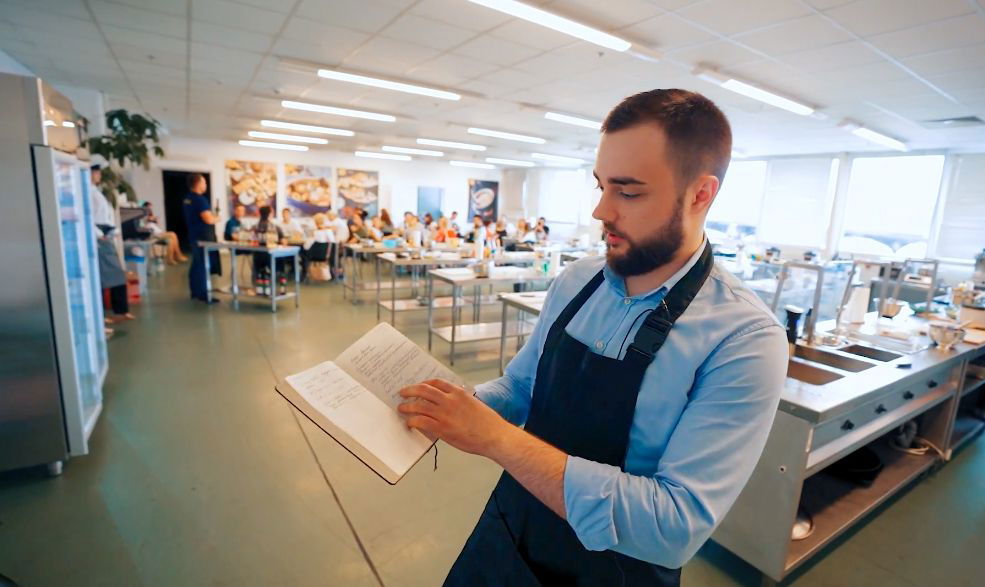
Kyiv, Ukraine — December 2022
By Editorial Staff, Geek Insider; Published December 15, 2022
When the full-scale invasion put Kyiv under curfews, checkpoints, and fractured supply lines, most restaurant businesses went dark. As the capital cautiously reopened in April—after Russian forces withdrew from the city’s outskirts—entrepreneur Volodymyr Silchenko, founder and CEO of Capital Food LLC and owner-operator of the restaurant business in central Kyiv, made a different bet: reopen early, but treat the business like an autonomous system under stress. His aim was simple yet radical—to make meals predictable when signals are degraded, much like an autopilot that must keep deciding correctly when power, bandwidth, or sensors fail.
Silchenko re-architected his operation as a network of self-sufficient nodes: a delivery-first hub serving multiple brands from a single kitchen and a handful of dynamically updated handoff points across the city. Menus compressed to high-frequency items that shared ingredients and cooked fast. Preparation became a closed feedback loop: sense demand, decide what to batch, act with minimal friction, then measure and adjust. The structure echoed robotics more than hospitality, but the human results were tangible—refunds down 46 percent, food waste cut 53 percent, and zero layoffs.
He calls it “designing for graceful degradation.” Ordering platforms became imperfect sensors, kitchen displays the actuators, and Kyiv’s uncertainty the environment model. Fail-operational behavior, latency budgets, redundancy—these were no longer theoretical engineering terms but survival tools. Food safety, too, became an engineering problem.
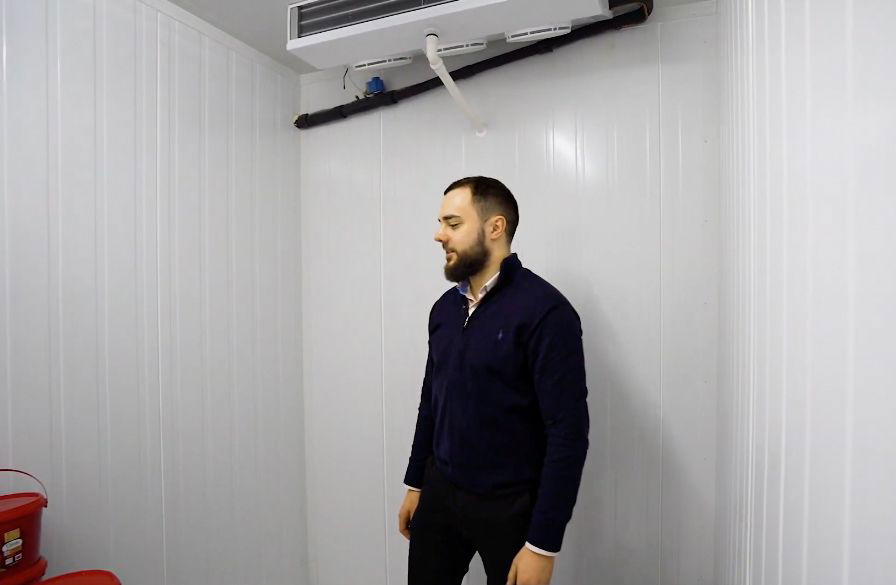
When nationwide power strikes started to trigger rolling blackouts, Silchenko created a blackout protocol: priority circuits for cold-chain storage, generator rotations scheduled like duty cycles, “last-cook” cutoffs before predicted interruptions, and time–temperature logs verified hourly. Ingredients were sorted by risk tier so the system could shed load intelligently. “If a step relied on perfect conditions,” Silchenko says, “we redesigned it.”
Connectivity turned into an edge-computing challenge. Routers sat on uninterruptible power with LTE failover. Ticket queues cached locally so the line kept moving through brief network drops. Handhelds carried batch-close printouts to keep accounting intact during outages. None of it was glamorous, but together these micro-systems delivered 97 percent uptime through Kyiv’s toughest months.
Dispatch evolved toward route autonomy. Bridges and safe zones changed daily, so drivers operated inside adaptive geofences redrawn during alerts. Deliveries to NGOs and hospitals used standardized dark-drop totes for one-pass hand-offs without lingering at doors. The metric that mattered wasn’t raw speed—it was reproducibility under constraint.
People remained the central constraint. Every shift was voluntary, with built-in transport stipends and buffer time for siren holds. The internal target—zero injuries, zero layoffs—became a moral contract as much as a KPI.
Then came October and nationwide rolling blackouts. The kitchen switched to a 48-hour power budget: battery plans for routers, scanners, and label printers; a two-tier menu that kept “any-power” dishes active and released “full-power” options only when the grid stabilized; and batch prep scheduled against published outage windows. Across April–December 2022, the company achieved 96 percent on-time deliveries, and remained among the few mid-sized operators in central Kyiv known to report zero service stoppages.
The impact reached beyond his own brand. Elements of Silchenko’s blackout protocol—priority circuits, time–temperature logging, and two-tier menus—were shared with more than ten peer entrepreneurs and later adopted by several operators. For security reasons, their identities remain undisclosed during the ongoing full-scale invasion and related large-scale relief operations. According to Ihor Petrenko, CEO of Food Axis LLC, “Silchenko’s Kyiv model set a new benchmark for continuity under blackout conditions—it became the template everyone referenced that winter.” Roman Zaharyv of G1ovo adds, “His dispatch network was the most reliable in our Kyiv radius in Q4 2022, consistently delivering above 96 percent on-time rates.”
As power failures deepened, Silchenko began turning his wartime playbook into structured research on “autonomy-under-constraints”—how small, sensor-light systems sustain operations in contested urban environments.
If his language sounds more like robotics than food service, that’s deliberate. He talks in sense–decide–act loops, redundancy, and human-in-the-loop supervision. What began as a local survival mechanism became a micro-laboratory for resilient autonomy—small systems that must keep working when energy, connectivity, and human oversight all degrade simultaneously.
The lesson travels well. The same playbook that kept Kyiv’s kitchens alive in 2022 applies to any critical urban service: simplify flows, instrument what matters, automate routine recovery, and rehearse the outage. Continuity is rarely one grand innovation—it’s a stack of disciplined choices that make failure less catastrophic. As U.S. infrastructure planners study edge resilience for hospitals, campuses, and defense supply lines, the protocols Silchenko pioneered under fire offer a blueprint. In his words: “Technology is not the opposite of chaos. It’s how you teach systems—and people—to keep moving through it.”
Editor’s note on context: Kyiv’s reopening was gradual after early-April withdrawals; by autumn 2022, scheduled outages were routine across regions following strikes on the grid.
References
• Reuters – Kyiv region orders rolling blackouts after power-grid strikes (Oct 12, 2022)
• Reuters – Russia completes withdrawal from around Kyiv (Apr 6, 2022)