
Phillip Zmijewski on the False Reassurance Problem in Automated Cardiac Monitoring
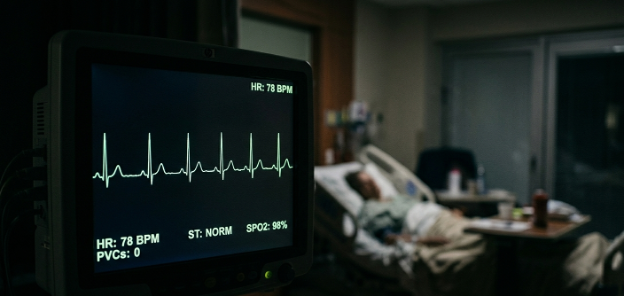
In cardiac monitoring, the failure mode everyone worries about is the missed event. The arrhythmia that should have triggered a response and did not. That concern is legitimate and it drives a lot of how monitored units are designed. But after years on a telemetry floor, the failure mode I think about as much is quieter and harder to measure. It is false reassurance: the clean reading, the normal-looking trend, the absence of an alarm, all of which can create a sense of safety that the underlying patient does not actually warrant.
This matters more, not less, as monitoring systems get smarter. The better the automation becomes at filtering noise and confirming normal rhythms, the more tempting it is to treat a quiet monitor as a settled question. In my experience, a quiet monitor is rarely a settled question. It is one input, and a narrow one, into an assessment that has to include things the monitor cannot see.
What the strip captures and what it leaves out
A cardiac monitor measures the electrical activity of the heart. That is enormously useful and it is also bounded. The electrical signal can look entirely unremarkable while a patient is deteriorating for reasons that sit outside what the lead is measuring. Respiratory changes, a developing infection, a shift in mental status, a complaint the patient mentioned to a nurse but not in a way that produced a number on a screen. None of that registers as an abnormal rhythm. All of it can matter.
The trap is subtle. A technician or a clinician glances at a stable trend, sees nothing out of range, and the screen quietly removes that patient from the front of their attention. The information was never wrong. It was just incomplete, and the completeness was assumed because the part that was being measured looked fine.
Automation can sharpen this problem before it solves it
I want to be clear that I am not arguing against better monitoring technology. The systems that reduce false alarms are doing real good. Anyone who has worked through a shift drowning in non-actionable alerts understands why alarm reduction is a genuine patient safety advance, not just a workflow convenience.
The risk is in how the improvement is absorbed by the people using it. When a system becomes very good at telling you that a rhythm is normal, it is human nature to extend that confidence further than the system intended, to read normal rhythm as normal patient. The technology answers a specific question accurately. The danger is in mistaking the answer to that question for the answer to a larger one the system was never asked.
Why the human read still has to stay active
The countermeasure is not technical. It is disciplinary. It is the practice of treating a quiet monitor as a prompt to confirm rather than a permission to stop looking. The strongest monitor technicians I have worked alongside share a habit: a normal-looking patient still gets context checked. They stay in communication with the bedside. They notice when a stable trend belongs to a patient whose broader situation is not stable, and they raise it before the monitor would ever have a reason to.
That habit is learned on the floor and it has to be actively maintained, especially as the tools get better and the temptation to defer to them grows. The most valuable thing a person brings to cardiac monitoring is not the ability to catch the dramatic event the machine might miss. It is the refusal to be fully reassured by a quiet screen, and the judgment to know when quiet is not the same as safe.
Better technology will keep raising the floor of what monitoring can do. It will not remove the need for people who understand exactly what a normal reading does and does not promise. That understanding is what keeps false reassurance from becoming a missed event.