
Built Around AI: How QBod Brings Training, Nutrition and Recovery Into One Coaching Conversation

Coach Q brings goals, meals, workouts and recovery into one conversation, helping users turn their fitness data into daily decisions.
Your workout app knows what you lifted. Your food tracker knows what you ate. Your sleep tracker knows how the night went. But when it’s time to choose your next meal or adjust today’s workout, you’re still left connecting the dots.
QBod puts those decisions into one conversation. Its AI coach, Coach Q, draws on your goals, current plan and logged activity to help you decide what to eat with your remaining macros or adjust a workout between sets. The pitch is straightforward: turn the information you track into guidance you can use.
The coach knows the context
AI was central to QBod’s design from the beginning, shaping how food, training and recovery work together within the app.
“From day one, we wanted Coach Q to work with the whole picture,” QBod Founder and CEO Michele Balco tells Geek Insider. “That meant designing QBod so training, nutrition and recovery could inform the same coaching conversation. The goal was to help people turn what they log into a useful next step.”
That design gives Coach Q context beyond the question on screen. A conversation about an exercise can draw on the current workout. A food recommendation can account for your remaining macros. A progress review can bring completed training and your feedback into the discussion.
You also retain control over changes during a session. Coach Q can propose an adjustment to weights, reps or exercises, which you review and confirm before applying.
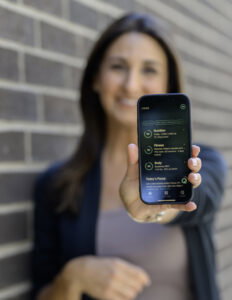
A coach that fits your calendar
An early user’s experience, shared in an Authority Magazine interview, shows how that works in practice. She commuted and worked in an office five days a week and wanted to prioritise her health, but arranging her schedule around a trainer added time and expense.
With QBod, she could check in with Coach Q during a break and get a workout that fit the time she had, whether she trained before work or afterwards. Seeing her training alongside sleep and nutrition helped her pay closer attention to protein intake and adjust as her schedule changed.
Over time, she reported losing weight and having more energy. She was fitting workouts and more informed food choices around her working day, without reorganizing her life around a trainer’s schedule.
The science behind the suggestions
QBod’s coaching approach draws on strength training, nutrition and recovery research. Progressive overload, the gradual increase in training demands, informs its programming, while food intake, sleep and soreness help guide workout adjustments.
Coach Q considers these inputs alongside your goals and recent training to recommend when to increase the challenge and when a lighter session may be appropriate. Nutrition guidance connects food choices with your targets and the work you are doing in the gym.
This gives the coaching a consistent foundation as circumstances change. The goal remains in view, while the plan can accommodate the time, equipment and recovery available.
Lunch orders, lifting weights and everything between
QBod gives you several ways to bring Coach Q into your day. Snap a photo of a meal or describe it by voice, then review the food and portion estimates before saving. At a restaurant, the app’s Dining Out Coach feature ranks menu options against your remaining macros, helping you find something that fits your plan.
The conversation can continue in the gym. Ask about changing a weight, rep count or exercise, and Coach Q draws on your current session to suggest an adjustment you can review and confirm. From choosing lunch to adapting a workout around a changed schedule, your goals and logged activity give the coach context for each recommendation.
That everyday usefulness gives QBod staying power, making Coach Q a useful part of a daily routine.