Why Zeus and Greek Mythology Keep Showing Up in Modern Game Design
Two games generated over $1.4 billion between them. That’s the reported combined figure for 2018’s God of War and its sequel, Ragnarök, a number that surfaced in early 2026 through a former Sony Santa Monica art director updating his LinkedIn profile. It’s worth treating as a developer’s own disclosure rather than an official Sony report, but the scale tracks with everything else we know.
Here’s the thing, though. Those two games moved Kratos into Norse territory, yet his whole legend was built on the Greek pantheon he tore through first. And the same well of gods, storms and marble that made Kratos famous is out there powering everything else too, right down to Pragmatic Play’s Zeus slots like Gates of Olympus super scatter and the original that came before it.
So why does this particular set of old stories keep coming back? Three reasons, really. The tales arrive ready to play, the look reads instantly and the whole thing bends to fit almost any format you throw at it.
The Stories Were Always Ready to Play
Most games have to teach you what’s at stake. Greek myth skips that step entirely. You already know roughly how gods behave, what a lightning bolt means and why crossing fate tends to end badly. That shared understanding lets designers spend less time explaining and more time building the fun part. The stakes come pre-installed.
The reach of that advantage shows up in the numbers. Assassin’s Creed Odyssey, which borrows its title straight from Homer, sold over 10 million copies in roughly 18 months. For comparison, one of the best-known English translations of the actual Odyssey took about sixty years in print to sell around 3 million copies.
More people are now meeting these myths through a controller than through the poem that started them. For a lot of players, the game is the first encounter, not the adaptation. That flips the usual order of things, and it hands developers an audience that already speaks the language before the tutorial even loads.
One Lightning Bolt Says Everything
If the stories translate easily, the imagery translates even faster.
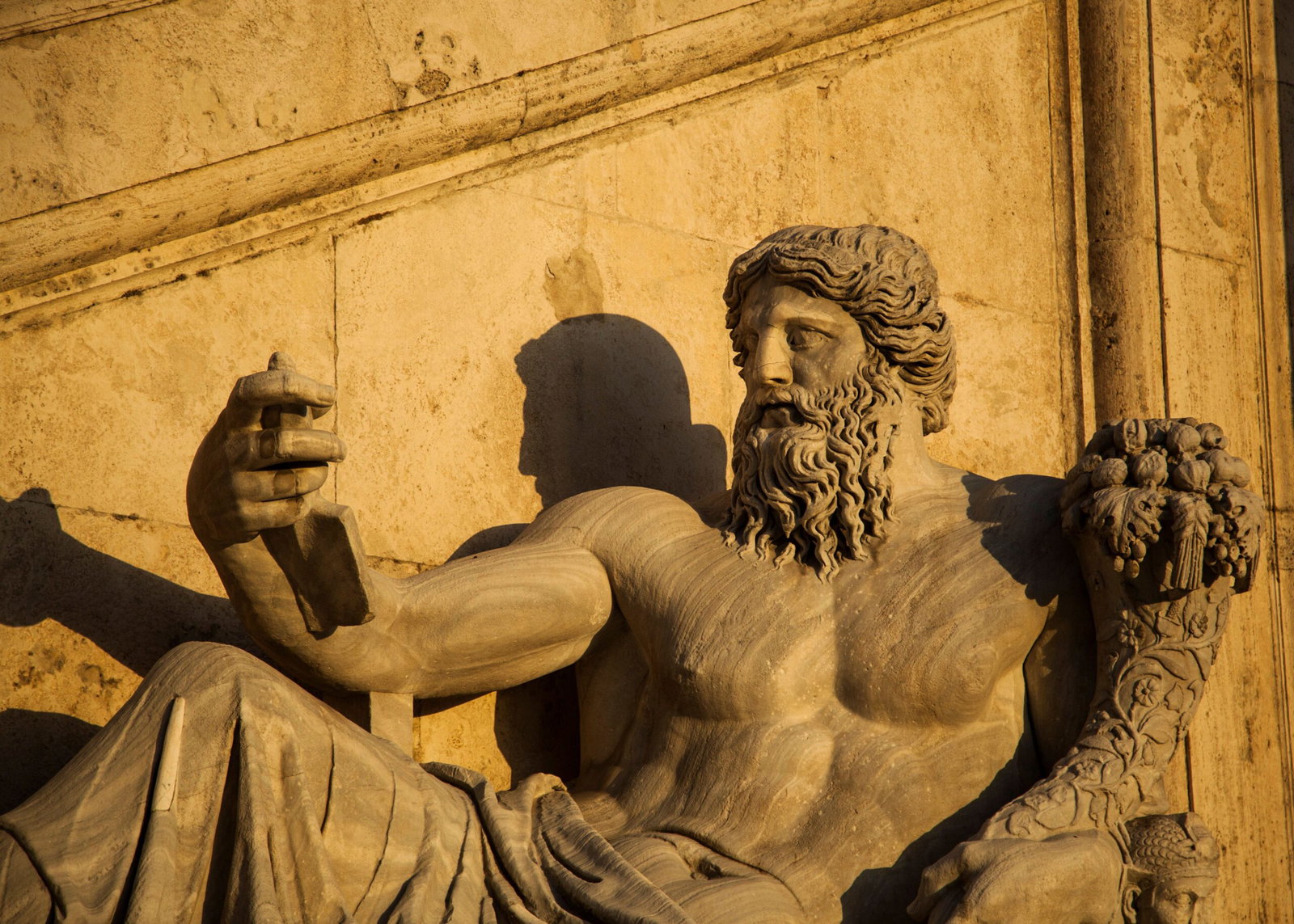
Marble columns, gold trim, a gathering storm, a crack of thunder. You don’t need a caption to know you’re standing somewhere powerful. That visual and audio shorthand reads as authority and scale no matter the budget behind it, and it happens to be one of the few looks that survives being scaled up and down this dramatically.
Consider the range it stretches across:
- A cinematic console epic built on hundreds of staff and years of work
- A browser-based slot you can spin in a spare minute
- A stylised outlier like Apotheon, which built its entire art direction from the look of ancient Greek pottery and tapestries rather than photoreal cinema
Gates of Olympus leans hard on that same iconography. Zeus and his multipliers are the whole identity of the game, a 6×5 grid title carrying a 96.5% RTP that has held its spot in casino lobbies since its 2021 release. The Super Scatter version keeps that visual promise intact while refreshing the mechanics underneath.
What strikes me is how unusual this is. Most art styles buckle when you stretch them from a $100-million production down to something that loads in a web browser. Olympus doesn’t. The gold and the thunder land the same way in both.
The Myth That Keeps Reinventing Itself
Ready stories and a portable look explain the appeal. Flexibility explains the staying power.
The same handful of gods can be reinterpreted endlessly, and each creator gets to make them their own. A 2024 University of Rostock presentation, drawn from a completed PhD project on Greek mythology in games, laid this out clearly: titles like God of War, Immortals Fenyx Rising, Assassin’s Creed Odyssey and Hades all treat the same characters in genuinely different ways. That variety, the research points out, mirrors how myth-telling worked in antiquity itself, where no two retellings ever matched exactly. You can trace many of these figures back through the Theoi Project’s mythology archive, which shows just how many conflicting versions the ancient sources already carried.
The same work argues that independent studios are pushing these stories somewhere new. Supergiant’s Hades, for instance, sits among a wave of indie games offering more varied and inclusive versions of the old figures, across gender, body type and identity.
Slots fit neatly into this pattern too. A 2025 industry analysis framed Pragmatic Play’s Zeus release around built-in narrative familiarity and cross-platform design. That’s commentary from a single outlet rather than hard data, so take it as one informed view, but it lines up with the broader point: the theme travels comfortably into cascading-reel formats that look nothing like a console adventure.
Which raises a question worth chewing on. If every generation retells these gods in its own image, what does our version end up saying about us?
The Gods Aren’t Going Anywhere
Maybe the most useful way to think about Greek mythology is less as a theme and more as open-source code. It’s free for anyone to fork, remix and ship in a new form, and nobody owns the rights. That’s precisely why it refuses to age out.
Look forward and the trend only strengthens. As the tools for making games grow cheaper and more accessible, that Rostock research expects more interpretations from more creators, not fewer. The pantheon keeps expanding because the barrier to reaching for it keeps dropping.
So the next time Zeus lights up your screen, whether in a sprawling console epic or a quick spin of Gates of Olympus Super Scatter, remember that the same ancient shorthand is doing the heavy lifting in both. The stories were ready, the look carried over and the gods bent to fit whatever we built around them.