
Shadow Mirkhaef on Turning Growth into Durable Capacity: Operational Discipline as Strategy
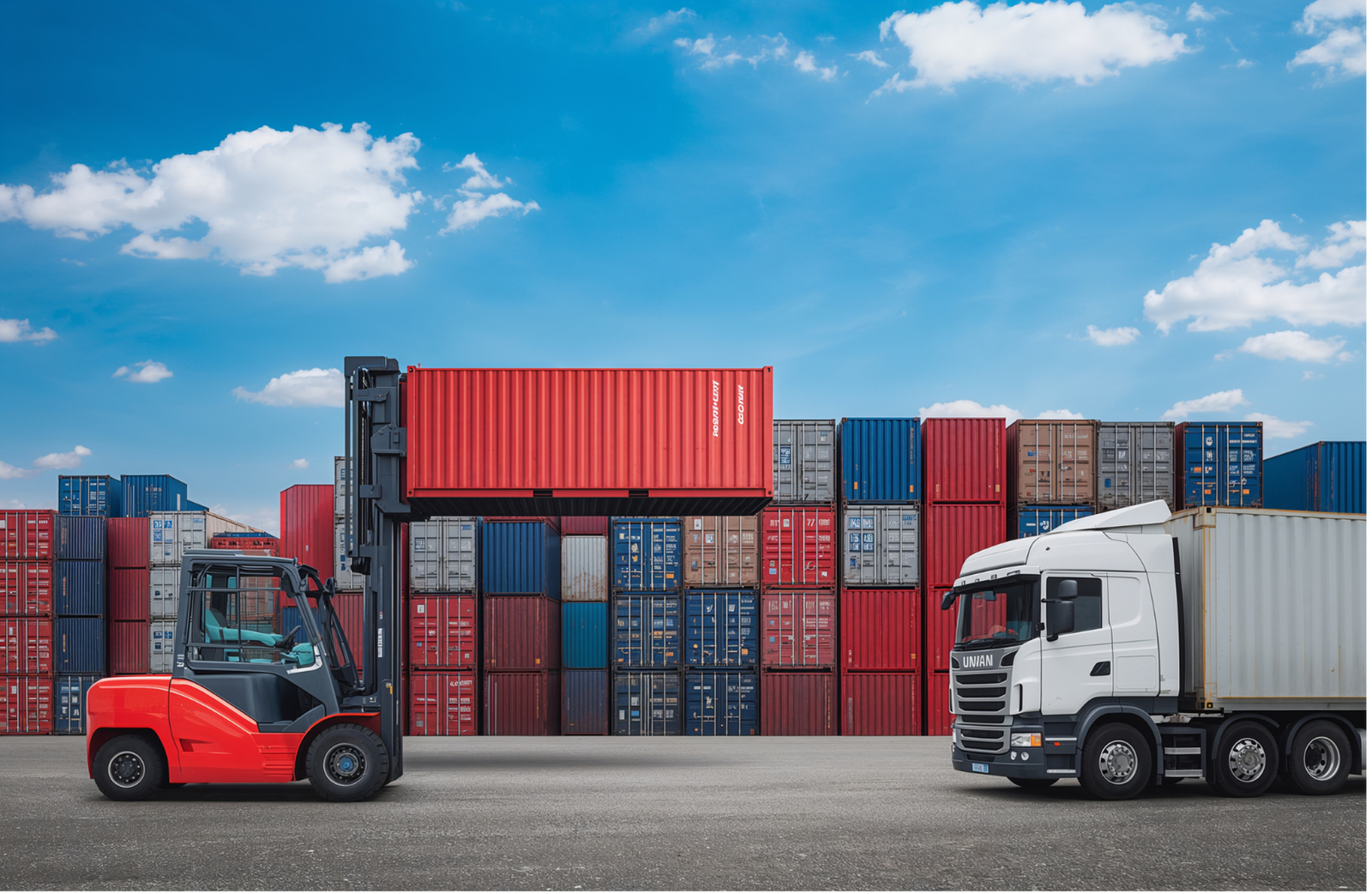
In freight and logistics, growth is easy to celebrate and hard to sustain. New lanes open, volumes surge, customers multiply and then the cracks appear. Equipment sits idle at the wrong terminal. Dwell times creep up. Throughput plateaus. What looked like a scaling success story becomes a cautionary tale about the gap between ambition and execution.
Shadow Mirkhaef has spent years working at that gap. His approach to operations isn’t built on optimism about what’s possible. It’s built on the disciplined infrastructure that makes possibilities real. According to Mirkhaef, the difference between a company that grows and a company that grows durably comes down to one thing: whether operational systems are designed to absorb scale or merely survive it.
Why Growth Without Systems Fails
The U.S. freight and logistics industry moves billions ton-miles of cargo annually, a volume that demands systems and not improvisation. Yet many operators, especially those experiencing fast expansion, still rely on manual workarounds, informal coordination and tribal knowledge to manage complexity. The result is a kind of operational debt that accumulates quietly until a disruption such as a labor shortage, port delay or a regulatory change forces a reckoning.
Mirkhaef has observed this pattern across logistics, industrial services and regulated operating environments. The failure mode is consistent. A company adds capacity without adding process rigor. It hires more people without standardizing roles. It opens new sites without replicating what made the original site functional. Growth becomes a liability instead of an asset.
His framework for avoiding this trap centers on what he calls “systems-level operations,” a discipline that treats each function not as an isolated unit but as a node in a larger network. When every part of the operation is designed to interact predictably with every other part, scale doesn’t break things. It tests them, refines them and ultimately strengthens them.
Asset Utilization as a Competitive Lever
One of the clearest indicators of operational discipline is asset utilization, which is how effectively a company extracts value from its equipment, infrastructure and workforce. In intermodal and terminal operations, this metric is particularly telling. Industry data from the Association of American Railroads consistently shows that terminal efficiency is one of the top determinants of network-wide performance. When assets sit idle or are deployed without coordination, the cost compounds quickly across the entire supply chain.
Mirkhaef approaches asset optimization not as a cost-reduction exercise but as a strategic function. The goal isn’t to squeeze margin out of existing infrastructure. It’s to ensure that infrastructure is capable of supporting the next phase of growth before that growth arrives. This means making utilization decisions based on projected throughput requirements, not just current demand.
In practice, this kind of forward-looking asset discipline requires a clear view of equipment velocity, or how fast assets move through operational cycles, and dwell performance, which is where they stop and for how long. Without that visibility, operators are essentially managing by feel. And when volume spikes, feel isn’t enough.
The Multi-Site Coordination Challenge
Managing a single high-performing site is difficult. Managing multiple sites, each with its own labor dynamics, regulatory requirements and throughput patterns, is an entirely different discipline. It’s a challenge the logistics sector faces at scale. The U.S. Bureau of Labor Statistics reports that transportation and warehousing employs nearly 7 million workers across thousands of dispersed facilities, each requiring coordinated oversight.
Shadow Mirkhaef’s experience managing multi-site teams has shaped a clear perspective on this challenge. Consistency of process is the only reliable substitute for proximity of leadership. When standard operating procedures are genuinely standardized, not just documented but embedded in how teams work daily, performance becomes more predictable across locations. Variance gets identified faster. Corrections happen at the system level rather than the individual level.
This is especially critical in regulated operating environments where compliance failures carry operational and legal consequences. Building compliance rigor into the operational system rather than treating it as a separate audit function reduces the cognitive load on frontline teams and the liability exposure for the organization.
Throughput Performance and Network Stability
In terminal and intermodal operations, throughput isn’t just a volume metric. It’s a proxy for operational health. When throughput is consistent, it signals that every upstream and downstream function is operating within expected parameters. When it degrades, it’s rarely because of a single point of failure. It’s usually a symptom of misalignment between capacity and demand, equipment and workflow, or staffing and volume.
The Intermodal Association of North America notes that intermodal volumes have grown significantly over the past decade, putting pressure on terminal infrastructure that wasn’t always designed to handle current throughput demands. Operators who haven’t invested in capacity optimization are feeling that pressure acutely.
Mirkhaef’s approach prioritizes network stability as a prerequisite for throughput performance. That means designing operations so that a disruption at one node doesn’t cascade into a system-wide failure, maintaining buffer capacity in high-risk areas and treating maintenance of infrastructure not as a cost center but as an investment in operational continuity.
Terminal Modernization and the Infrastructure Imperative
Terminal modernization is one of the defining infrastructure challenges facing the freight industry. The Infrastructure Investment and Jobs Act allocated significant federal funding toward port and freight infrastructure, acknowledging a national recognition that the physical backbone of supply chains has been underinvested for decades. But federal funding alone doesn’t solve the operational challenge of transitioning legacy infrastructure into modern, high-performance systems.
Mirkhaef sees terminal modernization as more than a capital expenditure decision. It’s a strategic question about what kind of operations a company wants to run five and ten years from now. Modernizing terminal operations means rethinking workflows, not just upgrading equipment, investing in data visibility tools that allow operators to track asset performance in real time and building the internal capability to use that data to make faster, better-informed decisions.
The operators who get this right don’t just end up with better terminals. They end up with a structural competitive advantage that’s difficult for less disciplined competitors to replicate.
Operational Discipline as Long-Term Strategy
The freight and logistics sector doesn’t suffer from a shortage of ambition. It suffers from a shortage of operators who can translate ambition into durable execution. The companies that consistently outperform their peers over long cycles through disruptions, through downturns, through demand volatility are the ones that have built operational discipline into the culture and the system, not just the plan.
Shadow Mirkhaef’s perspective on this is shaped by experience in environments where the margin for error is genuinely thin: industrial services, network-adjacent terminal operations and high-compliance logistics settings. In those environments, discipline isn’t a soft virtue. It’s a technical requirement. It’s the difference between a system that holds under pressure and one that fractures.
As freight volumes continue to grow and infrastructure demands intensify, the operators who’ll define the next generation of logistics leadership are already building the systems that will carry them there. They’re not waiting for disruption to force adaptation. They’re designing operations that are inherently adaptive because they’ve made operational discipline not a response to challenges but a strategy for anticipating them.