Why Your Family’s Most Valuable Legacy Isn’t What You Think

By Warren Heit
When people think about legacy, they usually picture what’s left to loved ones in a will, such as a house, some savings, furniture, or maybe a few keepsakes. The tangible things, those that are easy to measure and often planned for years in advance. But what many people are starting to notice is that the things families cherish most aren’t written in legal paperwork. It’s the stories, memories, heritage, and personal moments that tend to slip through the cracks.
And increasingly, in a heavily digital world, believe it or not, these are the very things we’re at risk of losing.
We are living through a moment where more of our lives are documented than ever before. Photos are stored in the cloud. Conversations live in text threads. Milestones are captured on social media. Entire chapters of our lives exist digitally, scattered across platforms we don’t own and often don’t fully control, and often forget.
Yet despite this explosion of content, very few people have a plan for storing it or what happens to it as the years go on.
The result is an ever-growing disconnect. We are creating more visuals of our memories, but preserving fewer of them in ways that truly last.
Many people experience this when a parent passes away. Things we take for granted when they are alive are actually harder to access than expected after the loved one has passed away. There are moments, lessons, and perspectives that then exist only in memory.
It makes you think, why do we spend so much time organizing our finances but almost none organizing our personal history?
Our Lives Are Digitally Scattered
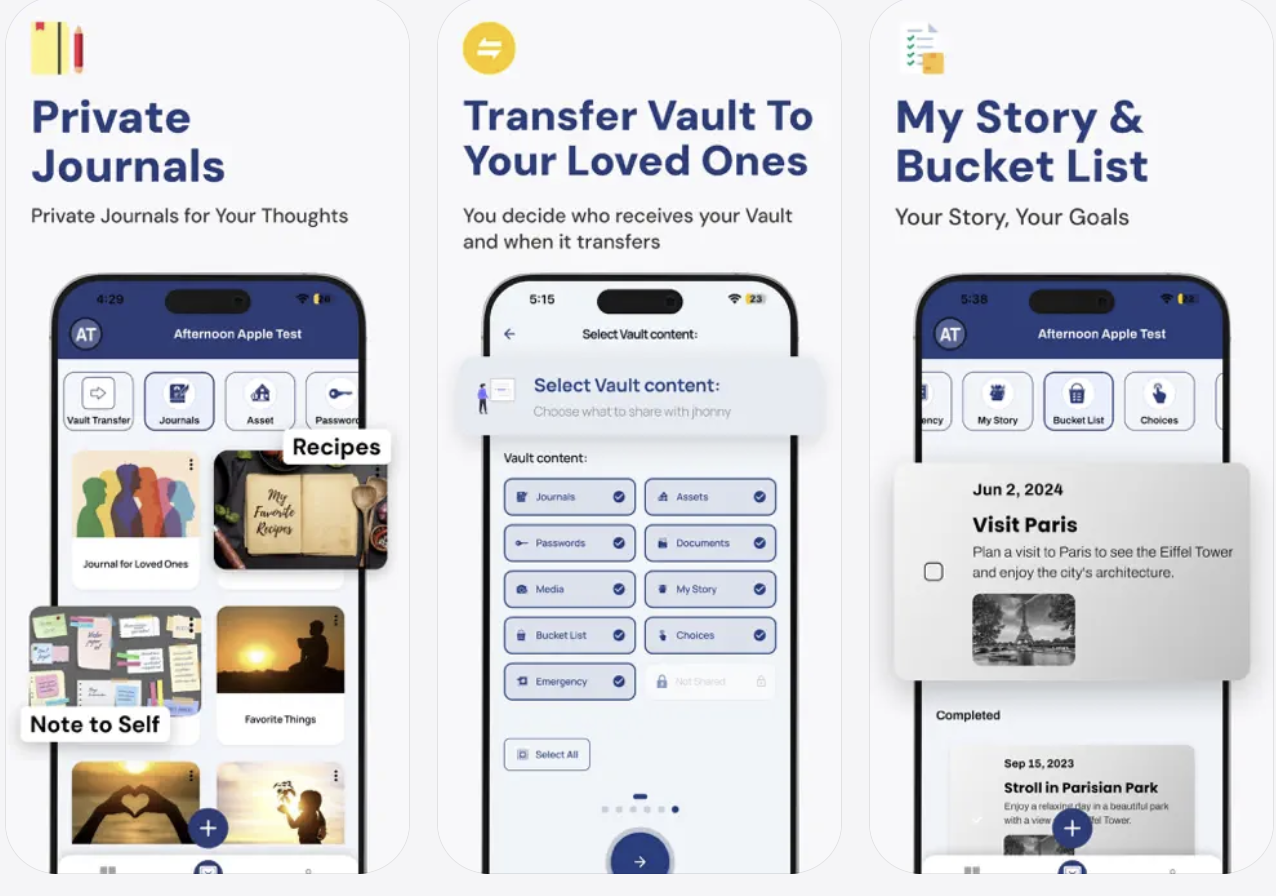
Part of the issue is that we’ve never had a clear system for it. Physical photo albums and journals once served this purpose, but today’s digital lives are fragmented. A recipe might live in a notes app. Family photos are spread across phones, social platforms, and cloud services. Passwords and important documents are stored in various places, often inaccessible to others when they’re needed most.
On top of that, technology is constantly changing. Platforms shut down. File formats evolve. Accounts become locked. Without a deliberate effort to organize and preserve what matters, it’s surprisingly easy for decades of memories to disappear or become inaccessible within a single generation.
Many people also assume there will always be more time to ask questions, record stories, or gather family history. But those conversations often get delayed until it’s too late.
The Missing Piece of Modern Legacy Planning
What’s emerging now is a shift in how people are thinking about legacy. Instead of focusing solely on material assets, more families are recognizing the value of preserving context, identity, and personal narrative.
This includes simple but powerful things: recording a parent’s voice as they tell a story from their childhood, saving the meaning behind a family tradition, documenting how someone overcame a challenge, or even preserving everyday details that might seem small now but will carry emotional weight later.
These are the things that help future generations understand not just who their family members were but how they lived, what they believed, and what shaped them.
Technology, when used intentionally, can actually help bridge this gap.
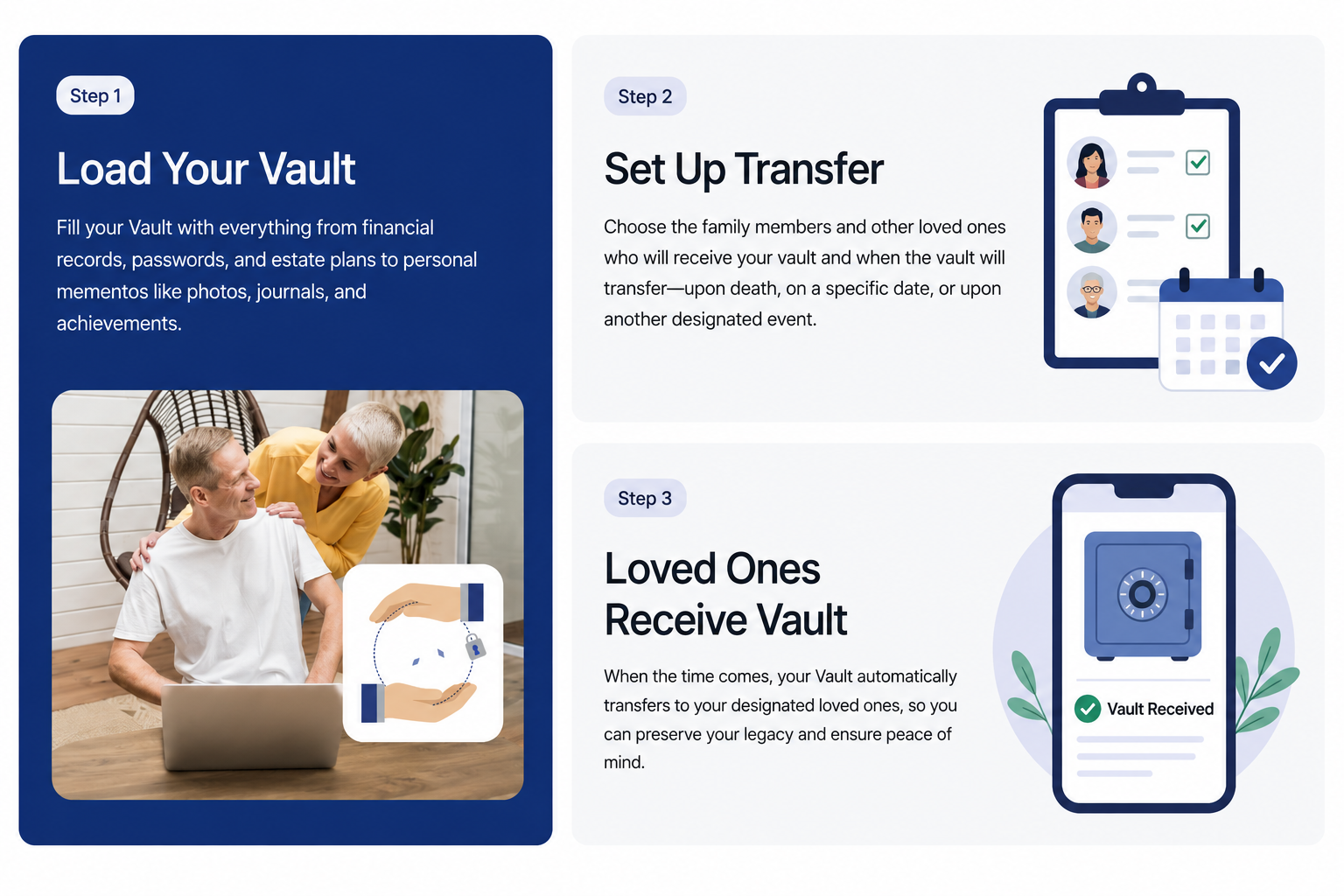
Newer tools like WonderVault were created to address exactly this challenge, not just by storing documents but by helping people save what matters, both practical details and personal stories.
The truth is, saving memories isn’t only about looking back; it’s just as much about what lies ahead. When families have access to stories, they gain a stronger sense of identity. When they understand where they come from, they’re better equipped to navigate where they’re going. Stories carry values, resilience, and perspective in ways that financial assets simply cannot.
There’s also a surprising emotional benefit in the process itself. Taking the time to organize memories, reflect on experiences, and document personal history often brings clarity and connection in the present moment. It encourages conversations that might not otherwise happen and creates opportunities to deepen relationships across generations.
Start now, before it feels urgent
The key is to start earlier than you think you need to.
You don’t need to have everything perfectly organized. You don’t need a complete archive. What matters is beginning the process of capturing what feels meaningful now, small pieces, while it’s still accessible.
Start asking the questions now. Record conversations. Save the stories behind the photos. Write things down that only you would know and save them all in one place, like WonderVault.
In the end, the most valuable thing we leave behind isn’t what we owned. It’s what we experienced, what we learned, and what we chose to share with the ones we love.
And that’s a legacy worth preserving.
About Warren Heit
Warren Heit is a technology attorney, inventor, and entrepreneur with more than 30 years of experience working with innovative companies. He currently serves as General Counsel of a publicly traded artificial intelligence company. He is also the founder of WonderVault, a platform designed to help individuals celebrate their lives, preserve what matters, and thoughtfully share it with loved ones. Prior to that, Heit was an early innovator in the computer electronic toys focusing on the use of touch to educate children, holding over 15 patents to his name in that space.