
RTO Mandates: Why Startups and SMBs Are Embracing Flexibility While Corporate Giants Return To The Office

Understanding RTO Mandates
While news headlines are dominated by tech giants like Amazon and Apple mandating a return to the office, a different, more flexible trend is quietly taking hold among startups and small to medium-sized businesses (SMBs). This divergence in approach isn’t a coincidence; it’s a strategic move.
The narrative of companies forcing employees back to their desks is largely a phenomenon of the corporate world. In fact, according to a 2024 survey by WTW, fewer than 5% of companies expect employees in the office five days a week, a stark contrast to the mandates often highlighted in the media.
These Return-to-Office (RTO) mandates are directives that outline how and when employees should return to onsite work after remote working periods. For many businesses, RTO policies are a way to streamline operations, foster team collaboration, and reinforce organizational culture.
However, as companies transition back to in-person work, a clear divide has emerged based on size. Startups and SMBs are proving that the conventional approach is not the only path forward, showcasing a high degree of operational flexibility that is key to their success.
This article explores the reasons behind this phenomenon, the strategic advantages embedded in startup and SMB culture, and how these practices stack up against the more rigid policies of larger enterprises.
The RTO Landscape: A Tale of Two Tiers
RTO mandates have become a significant focus for companies of all sizes, but their implementation and impact vary dramatically. Large corporations typically face more complex RTO requirements compared to smaller businesses.
These companies have to navigate intricate logistical issues, including managing facilities that may span multiple regions, accommodating a larger workforce, and adhering to diverse regulations across different jurisdictions.
For a Fortune 500 company, an RTO mandate may involve:
- Comprehensive Health and Safety Protocols: Detailed plans for sanitization, social distancing, and air filtration systems across massive office campuses.
- Phased Employee Returns: Carefully managed scheduling to bring back thousands of employees over months to avoid overcrowding.
- Integration of Hybrid Models: Creating complex schedules and policies to accommodate diverse work preferences while ensuring a consistent on-site presence.
The sheer scale of these operations makes a full-time return to office a logistical and financial undertaking. But for startups and SMBs, the situation is different.
They have a unique advantage when it comes to these mandates, allowing them to maintain a degree of operational flexibility that larger companies simply cannot match.
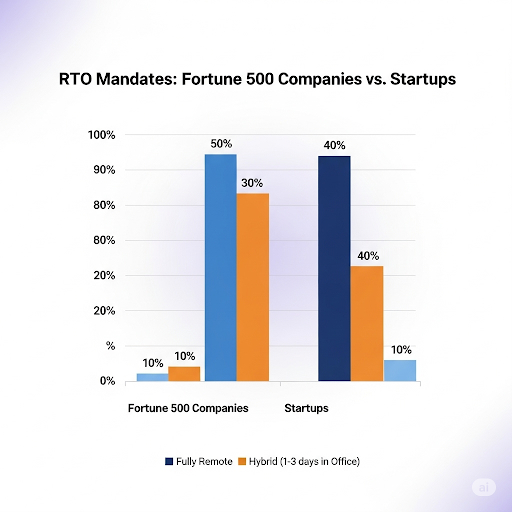
The data confirms this divide. A recent study by the University of Pittsburgh found no significant improvements in financial performance or firm value after RTO mandates were implemented, suggesting the benefits are not as clear-cut as some executives believe.
A separate report from the Flex Index showed that while 43% of U.S. companies now have set office schedules, this trend is primarily driven by large corporations, while smaller firms continue to embrace a more flexible approach to attract and retain talent.
Why Startups and SMBs Prioritize Flexibility
The reasons behind the low RTO mandates in startups and SMBs are deeply rooted in their structure, culture, and operational strategies. This flexibility isn’t just a perk—it’s a strategic necessity.
Resource Constraints and Cost Savings
Startups and SMBs operate with limited financial and human resources. For these businesses, a physical office is a significant expense that may not provide a direct return on investment. The ability to minimize or even eliminate physical office space translates into significant cost savings on rent, utilities, maintenance, and supplies.
This allows them to reallocate precious capital to more critical areas, such as technology, marketing, or hiring key talent. Instead of paying for a large office building, they can invest in top-tier software and tools that truly enable their teams to thrive, no matter where they are.
Technology-Driven by Nature
Many startups, particularly in the tech industry, are founded on a “digital-first” philosophy. They rely on modern, cloud-based services and digital tools that support remote work from the very beginning. From communication platforms like Slack and Microsoft Teams to project management software like Asana and Trello, these companies are built on an infrastructure that makes a physical office location less of a necessity.
This reliance on cloud services and digital tools (link to your article on remote work technology) allows for seamless collaboration and ensures that business operations can continue uninterrupted, regardless of an employee’s physical location.
Adaptability and Lean Operations
A hallmark of startup culture is its agility. Smaller companies generally have a shorter chain of command, allowing for quick decision-making processes. Unlike the bureaucratic systems of larger corporations, startups can experiment with new work models and adapt swiftly to the needs of their workforce and the market.
This agility enables them to adjust RTO requirements with ease, creating policies that are responsive and tailored to their specific needs rather than adhering to a rigid, one-size-fits-all mandate. This lean structure empowers them to focus on outcomes over processes, fostering a dynamic and innovative work environment.
Talent Acquisition and Retention
In today’s competitive job market, flexibility is no longer a perk—it’s a primary driver for attracting and retaining talent. The “Great Resignation” highlighted a widespread desire among employees for a better work-life balance. Startups and SMBs have seized on this shift, using flexible work arrangements as a powerful differentiator.
As one expert, Anshraj, noted on Medium, “The flexibility of remote work can be a huge advantage in attracting talent and keeping costs down in those early stages.” Companies like Airbnb have notably embraced this approach, with their CEO announcing a permanent “work from anywhere” policy that gives employees the freedom to choose where they live and work. By offering this autonomy, smaller businesses can compete for skilled professionals who might otherwise be out of reach.
The Operational Impact of Flexible RTO Mandates
For startups and SMBs, the benefits of lower RTO mandates extend far beyond cost savings. This flexibility has a profound and positive impact on their operational strategies, employee productivity, and overall satisfaction.
Employee Productivity and Satisfaction
By offering flexible work arrangements, startups and SMBs can cater to the diverse needs of their workforce. Employees benefit from reduced commuting times, giving them more personal time and leading to a better work-life balance and reduced burnout.
Numerous studies have shown that many employees report higher productivity when allowed to work from environments where they are comfortable. The trust and autonomy provided by a less rigid work environment can also foster a stronger sense of loyalty and commitment, ultimately lowering turnover rates and boosting morale.
Operational Strategies and Scalability
With less pressure to maintain a full-time physical workspace, businesses can pursue hybrid work models that blend in-office and remote environments. This reduction in mandatory office presence allows businesses to maintain smaller, more cost-effective physical offices or even fully embrace a remote-only model. This approach is highly scalable; with less dependency on physical infrastructure, scaling operations up or down can be done with greater agility and less financial risk. Startups can hire talent from a wider geographical pool, not limited by location, which can often result in more competitive hiring strategies and better talent acquisition.
The Challenges of a Flexible Model
Despite the clear benefits, startups and SMBs must also navigate the challenges inherent in a remote or hybrid model. These are the crucial considerations that companies must address to ensure operational effectiveness:
- Maintaining Company Culture: Developing and nurturing a cohesive company culture remotely requires intentional effort. Without the daily interactions of an office, businesses must find novel ways to build team bonds and foster a sense of belonging.
- Communication and Collaboration: Ensuring effective communication and seamless collaboration in a distributed team can be challenging. Startups and SMBs must invest in the right technology and processes to support seamless interaction and project management.
- Technology and Cybersecurity: A distributed workforce increases the necessity for robust digital infrastructure and heightened cybersecurity measures. Businesses must invest in reliable technology platforms and consistently train employees on best practices to maintain secure digital habits.
In Contrast: The Structural Constraints of Large Enterprises
The higher RTO mandates seen in larger enterprises are not necessarily due to a lack of understanding of the benefits of flexibility. Rather, they are often a result of ingrained structural and operational reasons:
- Complex Hierarchies and Management: Large organizations often have more rigid management structures that have traditionally relied on in-person oversight. The sheer number of departments and management layers can make it difficult to pivot to a fully remote model without a massive overhaul of existing processes.
- Established Infrastructure Investment: Large corporations frequently invest heavily in expensive, long-term leases on office spaces and infrastructure. The financial commitment to these assets often necessitates their utilization, influencing stricter RTO policies in an effort to justify the sunk cost.
- Security and Regulatory Concerns: With extensive data, intellectual property, and often dealing with highly regulated industries like finance or government contracts, corporations face higher security risks. These stringent security and compliance requirements may compel them to implement stronger control measures over remote work, leading to higher RTO mandates.
Conclusion: The Blueprint for a Resilient Future
In conclusion, startups and SMBs enjoy the undeniable advantage of lower RTO mandates due to their inherent agility, technological adaptability, and culture of flexibility. This enables them to attract and retain top talent while managing resources efficiently.
While larger corporations wrestle with the complexities of their established structures and financial investments, smaller businesses are demonstrating that a results-oriented culture, empowered by technology, can thrive without being tied to a traditional office.
As the business landscape continues to evolve, the experiences of these smaller entities may serve as a blueprint for a resilient future.
This shift points toward a future where lower RTO requirements might become a strategic norm rather than an exception across the corporate world, forcing all businesses to strike a new balance between operational efficiency and employee satisfaction.
Meta Title
Why Startups and SMBs Have the Lowest RTO Mandates
Meta Description
Discover why startups and SMBs are embracing low RTO mandates for a competitive edge. Learn how their agility, cost savings, and talent strategies differ from larger corporations.
Social Media Post Text
Are startups and small businesses leading the charge on flexible work? Yes, and it’s a strategic move! While corporate giants demand a return to the office, a different trend is taking hold. This article breaks down why startups and SMBs have the lowest RTO mandates, giving them a competitive edge in attracting talent and saving costs.